
Green supply chain
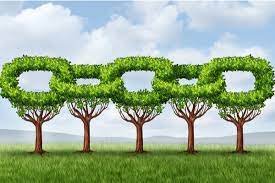
Green supply chain
courtesy : Green supply chain
1. Introduction
Since last couple of decades, environmental issues have been increasing and traveling faster than forest fire, country to region, region to world level territory, which is a serious cause of climate change and global warming. In addition, scarcity of natural resources and air and water pollution badly affect the fauna and flora, human life with different diseases they cause definitely, such like is chaemic heart disease, lung cancer, chronic obstruction pulmonary disease, stroke, Dracunculiasis, Cholera, Hepatitis, Typhoid fever, and Norovirus . While, the green supply chain concept occurs to mitigate environmental degradations and control air, water and waste pollution through the adoption of green practices in business operations. Undeniably, the basic ideology behind green concept is to enhanced environmental sustainability, but firms adopt green concept as “kill two enemies with one bullet”. Because green supply chain can reduce the environmental pollution and production costs and it also can spur economic growth, create competitive advantage in terms of greater customer satisfaction, positive image and reputation and provide better opportunity to export their products in pro-environmental countries . The definition of green idea is expanding with new innovations and techniques to protect environmental sustainability, which can be recognized by corporate social responsibility, green manufacturing, waste reduction, recycling and remanufacturing sustainable/environmental friendly supply chain, green supply chain, etc.
The term sustainable or green supply chain refers to the idea of integrating sustainable environmental processes into the traditional supply chain. This can include processes such as supplier selection and purchasing material, product design, product manufacturing and assembling, distribution and end-of-life management. Instead of mitigating harmful impact of business and supply chain operations, green supply chain involves value addition and/or value creation through the operations of whole chain. Undeniably, reducing air, water and waste pollution is the main goal of green supply chain, while green operations also enhance firms’ performance in terms of less waste manufacturing, reuse and recycling of products, reduction in manufacturing costs, greater efficiency of assets, positive image building, and greater customer satisfaction. displays a green supply chain of child’s crib manufacturer as an example.
#introduction
# natural resources
Five Examples of Green Supply Chain Management
Imagine you need to buy aluminum for your production and you have two suppliers to choose from. Their carbon footprint differs: the first produces 90% less carbon than the second. Since you care about the environment, your choice is simple: you’ll buy from the first supplier.
But how do you get to the point where the choice is obvious? You have to collect data, build an AI model that can take multiple factors into account, and digest its insights.
Interestingly, with AI, you get more room for maneuver. That’s because you’ll know which suppliers are producing the least CO2, as well as the reason why. You can then suggest improvements to other suppliers interested in partnering with you.
eg 1. Reducing Food Waste with IoT.
eg 2. Reducing CO2 Emissions with Delivery Drones.
eg 3. Ensuring Supply Chain Transparency with Blockchain.
eg 4. Calculating Emissions Through the Entire Supply Chain with AI.
eg 5. Reducing CO2 Emissions with Optimized Logistics.
#carbon footprint
#Five Examples of Green Supply Chain Management
#isbc

You may also like

Urban heat local food production
Vibrant Agro industry

