
Distribution/storage and circulation transportation system
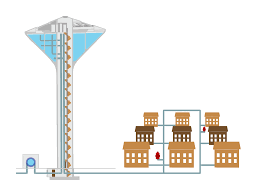
Distribution/storage and circulation transportation system
courtesy : Distribution/storage and circulation transportation system
Distribution
After a drug enters the systemic circulation, it is distributed to the body’s tissues. Distribution is generally uneven because of differences in blood perfusion, tissue binding (eg, because of lipid content), regional pH, and permeability of cell membranes.
The entry rate of a drug into a tissue depends on the rate of blood flow to the tissue, tissue mass, and partition characteristics between blood and tissue. Distribution equilibrium (when entry and exit rates are the same) between blood and tissue is reached more rapidly in richly vascularized areas, unless diffusion across cell membranes is the rate-limiting step. After equilibrium, drug concentrations in tissues and in extracellular fluids are reflected by the plasma concentration. Metabolism and excretion occur simultaneously with distribution, making the process dynamic and complex.
After a drug has entered tissues, drug distribution to the interstitial fluid is determined primarily by perfusion. For poorly perfused tissues (eg, muscle, fat), distribution is very slow, especially if the tissue has a high affinity for the drug.
(See also Overview of Pharmacokinetics.)
Volume of distribution
The apparent volume of distribution is the theoretical volume of fluid into which the total drug administered would have to be diluted to produce the concentration in plasma. For example, if 1000 mg of a drug is given and the subsequent plasma concentration is 10 mg/L, that 1000 mg seems to be distributed in 100 L (dose/volume = concentration; 1000 mg/x L = 10 mg/L; therefore, x= 1000 mg/10 mg/L = 100 L).
Volume of distribution has nothing to do with the actual volume of the body or its fluid compartments but rather involves the distribution of the drug within the body. For a drug that is highly tissue-bound, very little drug remains in the circulation; thus, plasma concentration is low and volume of distribution is high. Drugs that remain in the circulation tend to have a low volume of distribution.
Volume of distribution provides a reference for the plasma concentration expected for a given dose but provides little information about the specific pattern of distribution. Each drug is uniquely distributed in the body. Some drugs distribute mostly into fat, others remain in extracellular fluid, and others are bound extensively to specific tissues.
Many acidic drugs (eg, warfarin, aspirin) are highly protein-bound and thus have a small apparent volume of distribution. Many basic drugs (eg, amphetamine, meperidine) are extensively taken up by tissues and thus have an apparent volume of distribution larger than the volume of the entire body.
#Pharmacokinetics
# permeability of cell membranes
#circulation transportation system
#ISBC

You may also like

Urban heat local food production
Vibrant Agro industry

