
Development of recycled materials
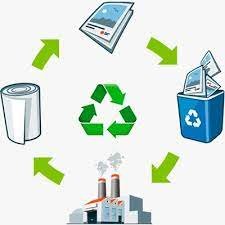
Development of recycled materials
courtesy : Development of recycled materials
What is recycling and where does it fit in terms of integrated waste management?
Recycling is the process whereby any discarded products and materials that have been reclaimed or recovered are refined, reprocessed and converted into new or different products. The term ‘recycling’ is often incorrectly used in a wider sense to describe the complete cycle, from collection, through processing to the production of new objects, or secondary raw materials, from reclaimed material. Recycling is just one of the ways to minimise waste. Other waste minimisation methods include re-use (using an item again for the same purpose for which it was originally made, e.g. re-using a container such as a bottle or glass jar) and repair (mending an item that was unserviceable because it was broken).
Certain waste streams may also be diverted from one source to a manufacturer who can use the waste as raw materials for a different process. This is called a Waste Exchange.Another way to reduce the waste stream is to compost the rapidly biodegradable fraction and use the compost to enrich the soil for gardening with vegetables and other plants. This recycling process can also use earthworms to speed up the breakdown of organic waste and is then called ‘vermiculture’. Biodegradable organic waste is waste that will decay and eventually return to the soil and nature. It includes garden refuse (e.g. grass clippings) and animal, fruit or vegetable leftovers resulting from the handling, preparation or cooking of foods. Biodegradable waste includes the materials that rot in the general waste stream. If this ‘wet fraction’ is separated at the point of generation from the ‘dry fraction’ (mostly recyclable packaging materials), then the dry fraction remains ‘clean’ and is of more value to the recycler. More information is downloadable from the User- Friendly Guidelines published on the Department of Education and Training website.
Regulations
There is currently no law requiring recycling but future recycling targets might be regulated by law.
Economic incentives
Recycling projects need financial and logistical support in the early stages of their development to ensure their sustainability. This can take the form of:
• Direct cash payment in return for materials delivered or collected, e.g. at a buy-back facility;
• Subsidies for collection and transport of materials in each recycling area;
• Tax incentives, including tax exemption for recyclers who purchase new recycling equipment;
• Low-interest loans for the purchase of recycling capital equipment;
• Higher landfill charges and raw material charges;
• Incentives to facilitate market conditions that encourage recycling;
• Municipal support for recycling initiatives in the form of bylaws that facilitate the location, operation and use of such facilities as those that are used to collect and store recycled material e.g. paper, lubricating oil, traffic cones, envelopes, plastic desktop accessories, refillable ink cartridges; and
• Registration of recyclers.
The relevance of recycling to South Africa
| A viable recycling industry already exists in South Africa despite the lack of legislation to encourage or enforce it. Recycling should be promoted and supported so that it can reach its full potential and to maximise formal and informal employment opportunities. More information on the recycling industry may be obtained from website of the National Recycling Forum.
#Development of recycled materials
#National Recycling Forum
#waste minimisation methods include
#ISBC

You may also like

Urban heat local food production
Vibrant Agro industry

