
Buildings
Buildings
courtesy : Building
What is a smart building?
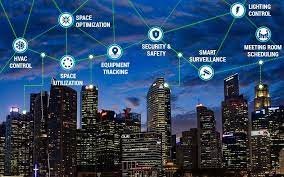
A smart building is one that uses technology to enable efficient and economical use of resources, while creating a safe and comfortable environment for occupants. Smart buildings may use a wide range of existing technologies and are designed or retrofitted in a way that allows for the integration of future technological developments. Internet of Things (IoT) sensors, building management systems, artificial intelligence (AI), and augmented reality are amongst some of the mechanisms and robotics that may be used in a smart building to control and optimize its performance.
Ways of utilizing smart building technology
For automation
The most fundamental feature of a smart building is that the core systems within it are linked. Connecting smart technology, such as real-time IoT occupancy sensors and building management systems together, means you can share information that can be used to automate various processes, including, but not limited to, heating, ventilation, lighting, air conditioning, and security. This is what makes a building “smart” – the ability of the systems within it to talk to one another.
To integrate with different building systems
Sharing and integrating data between building systems enables the value of the combined smart building to be greater than the sum of its parts.
For example, integrating IoT occupancy sensor data into a desk or room booking system means that you can enable efficient management processes and provide a smart environment for your employees with assets that know when they are free, booked or occupied.
For space optimization
Buildings and real estate are often the second-highest cost for a business (behind wages and employees), so ensuring that the space you have available is used optimally is essential.
Here sensors are an integral part of smart buildings and play an important role in collecting data to inform decisions about where to allocate resources. So, for example, occupancy sensors may be integrated into the building to provide information that will help you understand whether your facilities have the right types of spaces to meet your staff’s requirements. Occupancy analytics can help you identify:
– whether you have the right size or amount of meeting rooms
– which communal areas are the most popular or unpopular
– whether the working spaces provided are sufficient
#sustainable building
# building management systems
#ISBC

You may also like

Urban heat local food production
Vibrant Agro industry

