
The benefits of open spaces in integrated townships
Courtesy : The Tribune
The benefits of open spaces in integrated townships
India is witnessing an upsurge in the demand for homes in well-developed townships due to the challenges that ever-increasing urbanisation is placing on the quality of life in the cramped city centers and suburbs.
Arvind Jain
India is witnessing an upsurge in the demand for homes in well-developed townships due to the challenges that ever-increasing urbanisation is placing on the quality of life in the cramped city centers and suburbs. Many of India’s metros and other large cities have seen an unprecedented level of saturation, and integrated townships lend themselves as the logical solution to home seekers.
Township developments, which tend to happen on the outskirts of our cities, provide not only affordability but the kind of convenient, healthy and secure lifestyle which have long since become history in our larger cities.
In the midst or rather on the fringes of the unfolding urban chaos, integrated townships provide the kind of enabled and secure lifestyle that urban dwellers yearn for, yet are unable to access in normal residential developments. While eliminating the filth and chaos of city life, townships simultaneously provide every quintessential need of modern living, including schools, departmental stores and shopping malls, hospitals and places for leisure and entertainment within a convenient distance.
Apart from the affordability factor, there is another important reason why integrated townships are developed on the outskirts of cities. One of the USPs of such developments is the generous availability of open spaces, which one cannot hope for living in an over-populated city where hardly any spaces are left undeveloped. The crass commercialisation of real estate development demands that every available square inch in a city be consumed by concrete – be it in the form of residential and commercial buildings or roads.
Integrated townships, on the other hand, offer their residents open spaces in the form of parks and gardens, jogging tracks, children’s playgrounds and a lot more. This characteristic of open spaces is about a lot more than just aesthetics and brings a number of social and economic benefits, as well.
Benefits of green open spaces
Green, open spaces provide the ideal means for ground water recharging, rainwater harvesting and setting up solar panels to generate uninterrupted sustainable energy.
The proven medical benefits of green open spaces also mean lower healthcare bills for residents, apart from the fact that elders as well as children live more vigorous, and therefore, happier lives. All these factors result in the exclusive and highly desirable characteristics of integrated townships, which directly boost the valuation of properties on the real estate market.
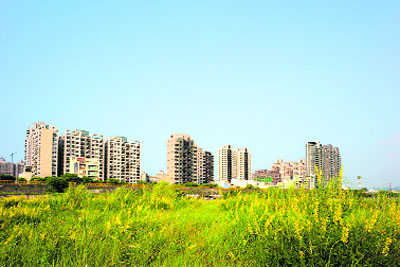
Many upcoming regions around cities like Pune are now seeing township developments that keep the importance of open spaces in mind. While residential buildings within these townships are developed vertically so as to maximise space and keep the apartments affordable, green open spaces are always a central concept.
Perfect planning is the key to success
This is why not all integrated townships are created equally. Expert planning at the design stage itself can ensure that all residential buildings have equal access to green open spaces. Lack of such planning will create gross variations in the demand for and therefore pricing of residential spaces in different buildings and even within the same building. If a township is planned thoroughly, keeping in mind that every resident expects to have reasonable access to green open spaces, then the entire project is guaranteed to succeed.
Unfortunately, some of the earliest integrated townships in several cities were not planned with this all-important factor in mind. Contemporary township developers have the advantage of informed hindsight on the mistakes which earlier players committed, and the opportunity to avoid them.
What this means for families who are determined to make the township lifestyle their own is that careful evaluation is of utmost importance. Even in the early construction stages, intending buyers can identify whether or not an integrated township provides an acceptable and desirable level of access to open spaces by studying the project layout.
As in all areas of the real estate market, knowledge is the key to making the right choices and ensuring that one’s property investment brings with it the hoped-for returns — both in terms of investment value and in lifestyle benefits.
How open spaces affect property values
There are abundant market studies which underscore the fact that urban dwellers are attracted to residential areas and projects that have large areas dedicated to open spaces – spaces where no development will occur at any point in the future. Given the health hazards and inconveniences of our increasingly polluted cities, people want alternatives that allow them to get closer to nature.
The option to move away from the inner city and suburban crowds, live in a greener environment and provide their children, elders and themselves a happier lifestyle involves a premium that people are more than willing to pay.
In an integrated township, flats that have access to open ventilation and possibly face any recreational open space are in highest demand. The property values also tend to differ from floor to floor, with lower floors carrying a premium over the ones above them. For those who prefer duplexes or bungalows, the distance from open recreational spaces will determine, more or less, how much people are willing to pay.
Generally, a community with a larger number of open spaces or recreational amenities is seen to have higher property values than its neighboring societies.
— The writer is Managing Director, Pride Group

You may also like

Urban heat local food production
Vibrant Agro industry

