
Space exploration should aim for peace, collaboration and co-operation, not war and competition
Courtesy : The Conservation
Space exploration should aim for peace, collaboration and co-operation, not war and competition
When the Soviet Union launched Sputnik 1 in 1957, it represented humanity’s first significant foray into the cosmos. Our imagination was opened to the wonder and lure of space for human endeavour as science fiction suddenly became science fact.

A space arms race?
At the time, the prevailing Cold War mentality contributed to suspicion and fear about what it meant to be in space, and resulted in the military roots of space technology and applications. John F. Kennedy famously stated that “if the Soviets control space they can control the earth, as in past centuries the nation that controlled the seas dominated the continents.”
The Space Race, as it would become known, was characterized by fierce competition between the Soviet Union and the United States to achieve space superiority.
Space technology and applications have evolved rapidly since Sputnik 1. Seven decades of space exploration and use have revolutionized the way the world communicates and greatly enhanced navigation on air, ground and sea.
Space science has enabled us to monitor weather patterns, enhance land use and greatly advance our understanding of our own planet and our place in the universe.
The desire to counter the space ambitions of others and to achieve superiority in space seems to have re-emerged. Despite the proliferation and commercialization of space activities, and the recognition of space as an essential part of every country’s economic, social and scientific progress, there is an alarming build-up of counter-space capabilities worldwide.
Crowded space
Even as private citizens can now crew space missions, military strategists are warning the competitive and congested nature of space will lead to an outbreak of conflict in outer space.
Simmering tensions on Earth increase the risk that humanity may somehow lurch into an unimaginable space war, destroying economies and critical civilian and military infrastructure that have become so heavily space-dependent.
In April, the International Committee of the Red Cross warned the international community that “the human cost of using weapons in outer space that could disrupt, damage, destroy or disable civilian or dual-use space objects is likely to be significant.”
If a war in space takes place, the devastation might have long-lasting effects.
Preventing colonialism
However, despite assertions to the contrary, a space war is not inevitable. A notion that space is the new “warfighting domain” contradicts the six-decade-long understanding that space is a shared area governed by international law, where global interests converge to ensure its exploration and use for the benefit of all countries, irrespective of the degree of their economic or scientific development.
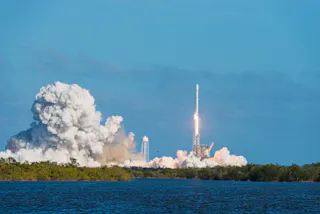
The first space-focused UN General Assembly resolution recognized the desire “to avoid the extension of present national rivalries into this new field.”
In 1967, a decade after Sputnik 1, diplomats came together during the height of Cold War brinksmanship to conclude the Outer Space Treaty. Today, 111 countries are parties to this phenomenal feat of international diplomacy, which underlines the common interest of all humanity to explore and use outer space “for peaceful purposes.” The treaty also affirms that space, including the moon and celestial bodies, are free to be explored and used by all states “on a basis of equality and in accordance with international law.”
Departing from the traditionally reactive nature of international law, the Outer Space Treaty initiated the most significant principle of law for enhancing the common interest of all in space in order to thwart potential colonization ambitions in space. By declaring that outer space “is not subject to national appropriation” by any means, the Treaty established a foundational governance system based on mutual understanding and friendly relations.
The race towards peace
Since the 1980s, the UN General Assembly has every year passed a resolution on the prevention of an arms race in outer space (PAROS), the latest of which reminds the international community of “the importance and urgency of preventing an arms race” and calling on states to “refrain from actions contrary to that objective.”
The prevention of an arms race in outer space is vital yet contemplates and may even legitimize increased military uses of space. A proper emphasis of the humanity of space and the preservation of its safety, stability and sustainability drives the need for peace in outer space.
The Outer Space Treaty, and multilateral dialogue at the UN, have for decades provided the anchor to keep space free from conflict. There is no reason why this overarching legal and institutional framework for peace cannot continue to shelter us from irresponsible behaviour in space. The diplomatic language is shifting in this direction, as are initiatives to clarify international law as it applies to the military uses of outer space.
Governments, industry stakeholders, civil society and the younger generations all have a role to play in promoting the benefits and common interests of humanity in space, drawing inspiration from the words of the first human in space, Soviet cosmonaut Yuri Gagarin: “There is room in space for everybody.”
In an era when humanity is faced with climate change, a global pandemic and the rapid exhaustion of resources, there is no room for assertions of dominance and superiority. Rather, the common interests in peace that we all share are even more important, both on Earth and in outer space.

You may also like

Urban heat local food production
Vibrant Agro industry

