
Smart building
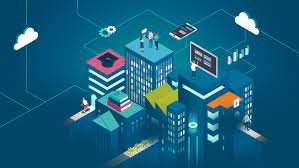
Smart building
courtesy : Smart building
From facilities management to healthcare to retail and beyond, smart buildings are changing the way their occupants live and work. Smart buildings utilize advanced technology to assist owners and building managers with day-to-day functions while also unifying those processes in an easy-to-manage central system. It sounds simple on paper, but in execution, the many facets of designing, building, and executing smart buildings are highly complex.
To that end, we’ve created this guide as a comprehensive resource for anyone who wants to learn more about smart buildings. Read on to find out how smart buildings work, how they benefit employees, and how this technology is revolutionizing commercial spaces.
What are some examples of smart building technology?
“Smart building” is a broad term that can encompass anything from basic internet-connected devices to spaces designed from the ground up to be more intelligent. Before understanding how smart building works, you first need to grasp the technological building blocks that bring them to life:
- The Internet of Things (IoT): Think of the IoT as an umbrella term for just about anything that connects to the internet. By working together, IoT devices can be used to remotely monitor and control the many devices that work side-by-side in a smart building.
- Sensors: Technically part of the IoT ecosystem, sensors can tell administrators a lot about a building. It’s a good way to keep track of occupancy, maintenance needs, climate controls, and so much more. (Unlike other smart building platforms, Vera by Resonai does not require external sensors or hardware. Request a demo to learn more!)
- Indoor navigation & digital mapping: Smart buildings can make use of digital mapping, a 1:1 digital duplicate of a physical building space. This enables indoor navigation features such as helping new hires to find their workspaces and directing guests to meeting rooms.
- Digital twins: Digital twins are 3D digital renderings of physical buildings that allow managers to visualize and plan remotely. Digital twin technology and features vary by company, but the most effective digital twins are highly accurate live simulations that are always “learning” and updating to give a real-time picture of the building in its current state.
- Augmented reality: The IoT goes hand-in-hand with augmented reality when it comes to smart building concepts. Typically accompanying a smartphone app, AR has a number of practical uses; guiding occupants to desks or meeting rooms, training new hires, or highlighting special deals in a retail environment are just a few.
- Control center: Having internet-connected sensors throughout your building isn’t helpful if you can’t easily keep track of the data they collect. An efficient smart building can be run from a single platform in which incoming data is viewed and managed from a universal app.
# management to healthcare
# technology is revolutionizing
#Smart building
#ISBC

You may also like

Urban heat local food production
Vibrant Agro industry

