
Railway news
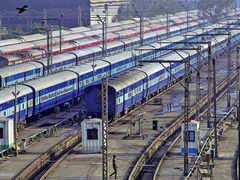
Railway news
courtesy : Railway news
Rail is one of the most cost and time-effective ways of moving people around urban areas, between cities or across countries. It has evolved from steam-powered engines to high-speed light rail that can carry passengers over massive distances in hours.
The rail market has begun to recover from the effects of the pandemic. Global News wire estimates that global commuter rail and public bus services will be worth more than $400 billion by 2025 compared to $285 billion in 2021.
Current Developments
With transport operators looking to increase passenger volumes in countries that have lifted pandemic-related travel restrictions, they need to address demand for safer technology (specifically contactless payments and interactions) and a more convenient and comfortable passenger experience. There are many technological aspects that is believed will drive rail operations forward, of which the following are likely to be most important.
Mobile connectivity with 5G becoming a reality
Mobile ticketing has gained traction on the back of improved internet access and developments in 5G technology, satisfying demand for contactless payments while offering commuters a range of information about their journey from balance details and route planning to real-time tracking and the ability to use their mobile as a ticket via a validator tap or other means. Rail operators are increasingly introducing mobile ticketing to enhance data management and personalisation of services and make their businesses attractive to partners and investors.
- E-ticketing: paperless, contactless: One of the best ways to enhance the rail passenger experience is to deploy automated fare collection, which makes payments and fares transparent while allowing rail operators to set fees and manage their operations centrally via a web portal. According to Allied Market Research, the global automated fare collection system market was valued at $6.6 billion in 2019 and is projected to reach $12.8 billion by 2027, a CAGR of 11.6%.
- Digital Onboarding: A major benefit of automated fare collection is digital onboarding of passengers. Improving the passenger experience is not an easy task, but some rail operators offer additional features such as seat and e-ticket management or early-bird or last-minute ticket purchases. To raise the experience level even higher, service operators could introduce open-loop payment methods to allow users to pay with QR codes biometrics, NFC or cards., which increases onboarding and journey flexibility.
- IoT – The Internet of Trains: The concept of the internet of things is well established. A new sub-concept of the ‘internet of trains’ has now emerged, which means connecting all smart and mobile devices together under one platform via Wi-Fi, merging the commuter with the train operator to provide a transparent digital experience while giving the rail operator access to increased customer information for operational management.
- Big data unlock new experiences: Those rail operators who manage to gather, analyse and utilise big data will gain a competitive edge. The use of data paves the way for effective predictive analytics, passenger management and platforms. The ability to anticipate passenger volumes and shifts in demand and station loads will further allow rail operators to adapt their businesses and maintain their competitive edge.
Indian Railway has embarked on a transformational journey and is harnessing innovation to usher in a new era of sustainable mobility in India – one that offers a safer, reliable, faster, punctual, and comfortable travel for the passengers, making every train journey a satisfying experience while being environment-friendly with lowest possible carbon footprint.
Indian Railway is a key driver for India’s economic growth and development. The Government of India has focused on investing in railways to upgrade its infrastructure networks fit for operating both freight and passenger trains at higher speeds which shall play a major role in integrating and bringing different parts of the vast country closer and thus enhancing economic activities in meeting the $1 Trillion economy target.
The amalgamation of advanced technologies and empowering measures by the Government in all the areas of railway from infrastructure to rolling stock, customer services and modernised railway stations, digitisation of railway operations and predictive asset management, implementation of the landmark Dedicated Freight Corridors (DFCs) and ambitious bullet train network are all propelling the nation towards sustainable mobility, with passenger experience and economy growth at the core. Many rail companies in India are effectively leveraging their OT x IT expertise in implementing their integrated railway solutions to build a resilient mobility infrastructure that augments India’s Social, Environmental, and Economic values.
Transforming Indian Railway, Enhancing Passenger Experience
By embracing digitalisation in all spheres of its operations — such as asset management, signalling, manufacturing and passenger information system — the Railways is on track to improving its revenues and passenger experience
Safety Enhancements
- Technological upgrades to minimize human errors, enhance safety of train operations & to enable higher throughput.
- Automatic Train Protection against passing signal at danger, over speeding collision.
- Elimination of manned level crossings from Golden Quadrilateral – Golden Diagonal (GQ-GD) route.
Improved Passenger Experience
- High–speed rail corridors for speedy train services.
- Real-time passenger information systems, and advanced digital signalling for punctual & reliable train services to passengers.
- Improved e-ticketing system.
- Free Wi-Fi at all A1 category stations.
Infrastructure Upgrades
- Electrification of rail network.
- Automatic Block Signalling with Traffic Management Systems.
- Energy-efficient rolling stock & introduction of semi-high speed fully air-conditioned trains.
- Development of world-class railway stations with state-of-the-art passenger amenities.
The Indian Railways is the third-largest railway network in the world by size, and is continuously undergoing changes. One area of importance is to improve the network capacity and utilisation, faster services, and safe running of trains.
#across countries
#Infrastructure Upgrades
#Safety Enhancements
#Indian Railway
#ISBC

You may also like

Urban heat local food production
Vibrant Agro industry

