
MOON EXPLORATION
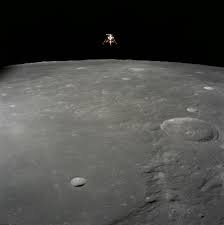
Moon exploration
courtesy : moon exploration
Plans
Following the abandoned US Constellation program, plans for crewed flights followed by moonbases were declared by Russia, ESA, China, Japan and India. All of them intend to continue the exploration of Moon with more uncrewed spacecraft.
India is planning to launch the Chandrayaan-3 lander mission in 2022, and it is studying a potential collaboration with Japan to launch the Lunar Polar Exploration Mission in 2024.
Russia also announced plans to resume its previously frozen project Luna-Glob, an uncrewed lander and orbiter, which was slated to launch in 2021 but which did not happen. In 2015, Roscosmos stated that Russia plans to place an astronaut on the Moon by 2030 leaving Mars to NASA. The purpose is to work jointly with NASA and avoid a space race. A Russian Lunar Orbital Station has been proposed to orbit around the Moon after 2030.
In 2018 NASA released plans to return to the Moon with commercial and international partners as part of an overall agency Exploration Campaign in support of Space Policy Directive 1, giving rise to the Artemis program and the Commercial Lunar Payload Services (CLPS). NASA plans to start with robotic missions on the lunar surface, as well as the crewed Lunar Gateway. As of 2019, NASA is issuing contracts to develop new small lunar payload delivery services, develop lunar landers, and conduct more research on the Moon’s surface ahead of a human return. Artemis program involves several flights of the Orion spacecraft and lunar landings from 2022 to 2028.
On November 3, 2021 NASA announced it had picked a landing site in the lunar south polar region near the crater Shackleton for an unmanned spacecraft that included NASA’s Polar Resources Ice-Mining Experiment-1. The precise location was termed the Shackleton Connecting Ridge, which features the advantage of near-continuous solar exposure and line-of-sight with Earth for communication.
#List of missions to the Moon
# moon exploration
Exploration of the Moon
The physical exploration of the Moon began when Luna 2, a space probe launched by the Soviet Union, made an impact on the surface of the Moon on September 14, 1959. Prior to that the only available means of exploration had been observation from Earth. The invention of the optical telescope brought about the first leap in the quality of lunar observations. Galileo Galilei is generally credited as the first person to use a telescope for astronomical purposes; having made his own telescope in 1609, the mountains and craters on the lunar surface were among his first observations using it.
NASA’s Apollo program was the only program to successfully land humans on the Moon, which it did six times. The first landing took place in 1969, when two Apollo 11 astronauts placed scientific instruments and returned lunar samples to Earth.
The first unmanned landing on the far side of the Moon was made by the Chinese spacecraft Chang’e 4 in early 2019, which successfully deployed the Yutu-2 lunar rover.
#exploration of the Moon
#International green building council
#NASA’s

You may also like

Urban heat local food production
Vibrant Agro industry

