
Jan 8 It’s Complicated: India’s History With Sustainability
It’s Complicated: India’s History With Sustainability
Did you know that one of the most ancient civilizations, the Harappan culture, originated in India almost 5,000 years ago at a time when other populations dwelled in forests? India is one of the oldest, most illustrious civilizations, and as a result, is enriched culturally. As a country, it has more languages, rituals, traditions, and separate histories within its states than the whole of Europe does. Besides all this, we are still a country with raging poverty, slow development, and many sustainability challenges, being one of the most vulnerable countries to climate change in the world.
It wasn’t always like this, though – many thousand years ago, India was a country filled with riches, trading, and clean systems. Even if we reflect on India a few hundred years ago, history shows us that it was home to one of the most efficient sewage systems, trade routes, and rich spiritual texts. In those times, before the great nation was tainted with many struggles and the woes of colonization, we were a magnificent society of efficiency and cleanliness that was raised to respect the environment around it. So, how did we get here – populated, unclean, and poor? #igbc @internationalgbc #international green building council
India before filth
The Vedic scriptures are some of the most ancient and important texts in Indian history and contain the knowledge of numerous historical episodes and the art of spiritual living. According to the Vedas and what was consequently taught by sages to the common people, the mind, body, and its surroundings were held to be in constant harmony, to be maintained in a way that the environment was one with the body of an individual, with equal respect given to it. The semantics of this expression was reflected in many texts, historical episodes, and teachings such as the Gita. #igbc @internationalgbc #international green building council
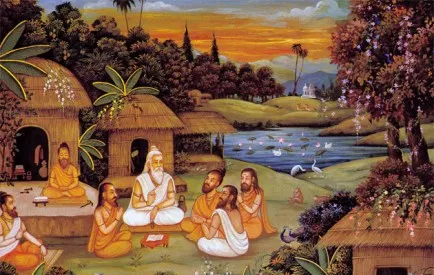
The age of sages: A lookback at the rich, ancient history of India
What has contributed to this state of contamination, then? It can be traced to the Mughal Empire, where the process of philandering, poverty, and disrespectful living caused the emergence of a broken India, further tested by the entry of colonizers in the 1800s. Prior to colonization, India contributed to more than 25% of the Indian economy – and after, less than a mere 2%. British India consisted of changing sewage systems, squandered industries, architecture, and core Indian teachings, which triggered a time period where our ages-old systems were abandoned for ease of living, even though they caused a damaged environment and climate.
The tenure of filth started then – Indians were treated horrendously, and as a result, the motherland was too. Where before the people were raised parallel to the Vedic beliefs of respecting the land and its many inhabitants, they were then taught to completely adopt the Western way of wasteful and self-serving living. This was further added to by a widespread lack of sanitation, food, and humane settings for Indians. By the time the colonizers left the country, half the population was starving and suffering, our previously peaceful, organized, and spiritual way of living forgotten. We left behind that respect for what was around us. We forgot about the great Maharishis of India who lived in harmony with the living around them. We moved on to an age of Industrialization, still carrying the scars of the past.
Getting here – and repairing India
With the influx of western culture and different processes around the globe, came the dominant age of coal, oil, plastic, metal, and philandering of resources. The Vedic scriptures tell us to respect the land we live on, that a life of comfort and richness is possible without the destruction of nature, but we moved on to replicate the way of living of other countries. Even with the same products, same environmental degradation, and same ease of living as the dominant countries, India still turned into a wasteland of littered streets, extremely high pollution, and a failing environmental balance. #igbc @internationalgbc #international green building council
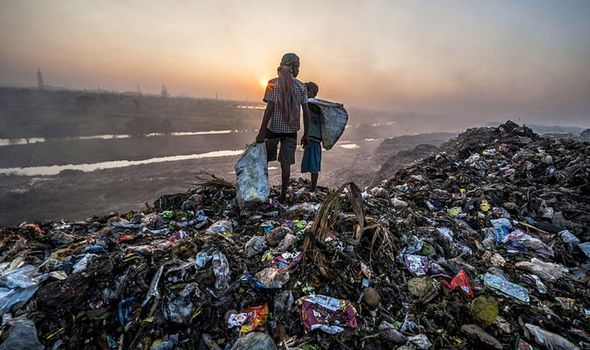
Children of a legacy: Many young Indians grow up surrounded by filth, working amidst it
This can be attributed to many factors. Firstly, a lack of wealth from the looting of colonizers made India and its people desperate for economic success required for the very continuation of their existence, causing cheap labor, over-production, and rampant industrialization to be adapted across the country.
Secondly, the education that comes with the entry of a life that depends on ease without regard to the environment was not given to the large population of the Indian people, resulting in a disregard for the environment and the impact of actions such as littering and wastage.
Thirdly, India’s fast growth (both economically and population-wise) created a system where only the well-off could afford hygienic living, health services, and education, with millions still suffering in poverty that could be traced back to broken systems and centuries-old disastrous British rule.
Indians as people are clean – raised with instincts to keep their homes and bodies pure, and to reuse and recycle whatever can be. It is therefore India as a country that is filthy – caused by centuries of uneducated, suppressive, and inhumane living. #igbc @internationalgbc #international green building council
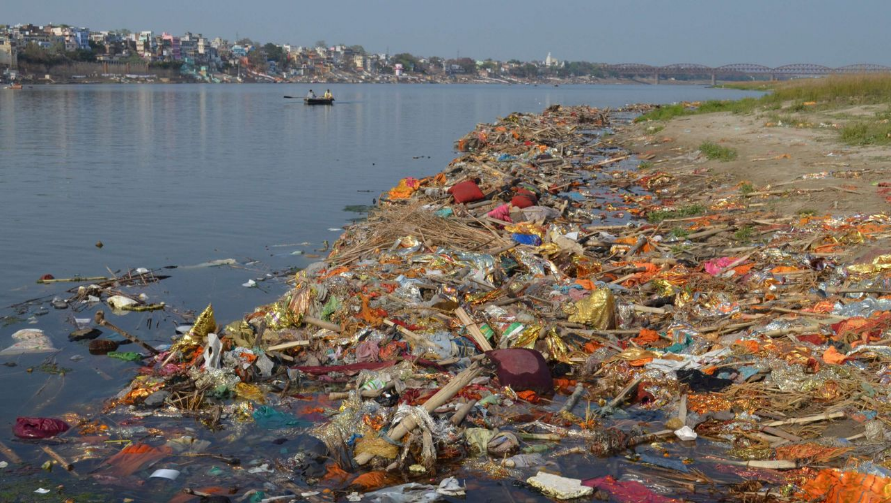
A conflict of Faith and Filth: The holy river of Ganga, polluted by its very worshippers
Ultimately, many things have contributed to India’s environmental downfall, but the history and teachings of the country prove that there may just still be hope for the land and for the people. Poverty, filthy streets, high death rates, a lack of hygienic living, etc. can all be traced back to multiple reasons, but what matters more is not the reason but the solution.
Indians must learn from the old scripts and a way of living that benefited all and maintained harmony with the environment. As we head closer to destruction, climate refugees and climate disasters will continue to occur at a higher rate – Indians must, at any cost, deflect this, and one of the ways would be to reflect on the sins done on us and bring back the scriptures and teachings that enabled a peaceful, happy world. #igbc @internationalgbc #international green building council
India is, after all, an ancient, glamorous civilization with a rich and expansive history – it is a country of greatness, one that can still learn from its golden ages.

You may also like

Urban heat local food production
Vibrant Agro industry

