
green innovation
courtesy : feedough
Green innovation
esides being top-tier companies, they are motivated to the cause of advocating environmentally friendly products.
The environmental challenges have reshaped the planet, with societies collapsing as a result of its detrimental impact. The need of the hour is to shift towards a world where people and nature coexist.
Earth can recover only with the human spirit’s resilience and innovations in seeking solutions and rebuilding after disturbances. One such innovation is green innovation. It’s a unique opportunity to go green while offering scope for growth, cost savings, productivity, and prosperity.
With an upsurge in green consumers, many companies are now shifting to green innovation to contribute to creating a greener future. So, what is green innovation? What is its importance?
Here’s a guide answering all the questions related to Green Innovation. .
What is Green Innovation?
Green Innovation refers to all forms of innovation that minimise environmental damage and ensures that natural resources are used in the most effective way possible.
It’s one such practice that improves a company’s competitiveness, economic and environmental performance. Reduced energy use, waste recycling, pollution control, resource sustainability, and green product design are all factors to consider.
Green innovation usually distinguishes itself from non-green innovations as it has the following characteristics:
- It reduces negative environmental impact.
- The target of innovation is a product, a procedure, a service, or a system.
- It meets customer expectations while remaining competitive on the market.
- It considers and innovates the entire product life cycle to develop a green offering.
- Economic or environmental considerations back it.
Importance of Green Innovation
Why do companies tend to shift towards green innovation? This is not only a result of stringent laws or market pressure but also because implementing environmental management policies provides a multitude of opportunities for the companies.
- It increases economic and social performance through a reduction in waste, cost, and other inefficiencies.
- It attracts new customers. According to the Nielsen Global Corporate Sustainability Report, 66 percent of respondents are willing to pay more for sustainable products. The study conducted by Harris Interactive survey found that 77 percent of American adults purchase green products/services.
- Green Innovation is used in the manufacturing process by companies to minimise production time and costs.
- It improves market position and gives an edge over their competition.
- Green innovation creates breakthroughs. For example, Patagonia is one of the most well-known activewear brands in the world. They’ve built repair centres to lower their carbon footprint. They contributed $10 million from Black Friday sales in 2016 to radical environmental groups.
Thus, Green Innovation is the key to enabling environmentally sustainable growth as it can lead to a cleaner and safer world.
Types Of Green Innovation
Depending on the form of implementation and the possible consequences, Catherine A. Ramus categorised green innovation into three types. These are:
- Green innovation that lowers a company’s environmental impact. (through re-usage and recycling of products)
- Green innovation that tackles the company’s environmental concerns. (by decreasing the usage of harmful components)
- Green innovation that develops environmentally friendly products and uses effective processes. (by using fewer resources or energy)
Examples of Green Innovation
The changing business environment and customer preferences has forced the businesses, both big and small, to go green. While one can find green innovation in almost every industry today, here are some notable examples that stood out of the crowd.
Pavegen: Paving The Way To A More Sustainable Future
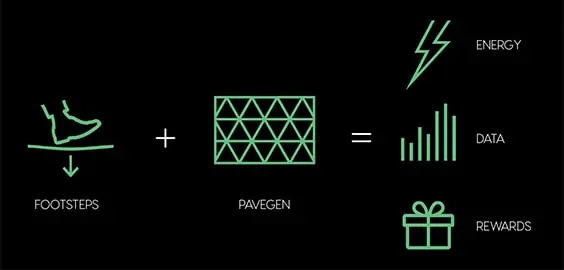
Founded by Laurence Kemball-Cook, Pavegen’s goal is to obtain kinetic energy from the regular movement of people and transfer it into electrical energy. The weight of people walking on the top surface causes generators under the tiles to rotate, producing electricity by electromagnetic induction. It produces about 3 joules per footstep or about 5 watts of continuous power. This energy can power local applications like lighting, sensors, and data collection and transmission or can be stored in batteries.
Ulta Chaata – Intelligently Enabling Sustainability
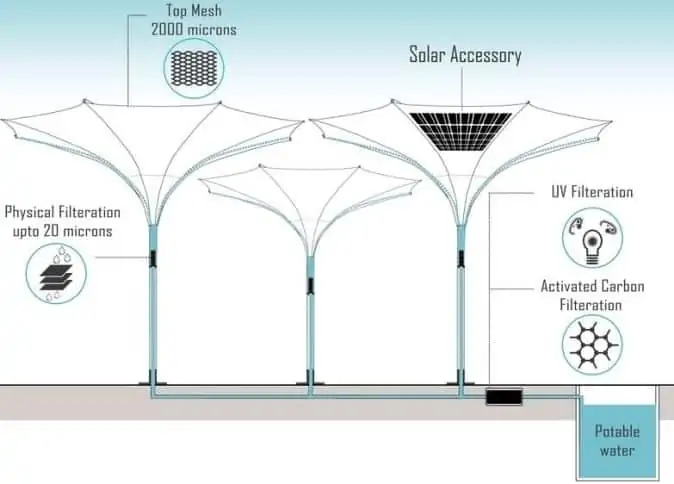
Even though rainwater is the purest source of water, it is squandered. Samit Choksi and Priya Choksi, co-Founders of ThinkPhi, created Ulta Chaata to preserve water in its purest form in open spaces. It consists of a steel unibody and a flexible inverted canopy. It includes solar panels for energy generation, rainwater purification (water purifier), energy storage, live lighting, active sensors, mobile controls, and a charging station. It is also a very large shading system, under which nearly 20 people can sit, or two cars can be parked. In a nutshell, it generates a single integrated product that builds green infrastructure.

You may also like

Urban heat local food production
Vibrant Agro industry

