
Green Home Certifications / Rating Systems
Courtesy : Green Home Green
Green Home Certifications / Rating Systems
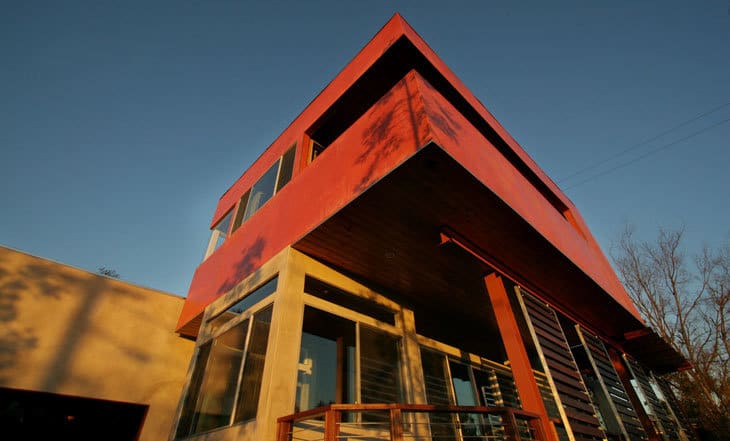
With the proliferation of green building in recent years, a number of certification programs have come online to ensure consumers get a “green” house rather than a “greenwashed” house.
Common to young industries such as this, many new players are getting involved, some of whom have their own ideas of what is considered “green.” This discrepancy of opinion can confuse the consumer. So to clear up this uncertainty, standards have been developed to ensure that home buyers get what they pay for.
Read through the different standards below grouped according to specific need (comprehensive certification, energy efficiency, or other specialized certifications) and look out for these certifications when browsing home listings.
Which Party?
When evaluating a green building certification system, the most important question to ask is whether its being done by a first-, second- or third-party.
First-party assessments are done by the certifying organization itself (or by someone related to the certifying organization). Second-party assessments are done by a trade association or other interested party and third-party assessments are performed by an independent party who has no financial interest in the outcome of the assessment.
Evaluation
To evaluate a rating system, Reed Construction Data suggests using the following four principles to determine their effectiveness:
- Science-based — Results/decisions must be reproducible by others using the same standard.
- Transparent — The standards and process for awarding the certification should be transparent and open for examination.
- Objective — The certification body should be free of conflict.
- Progressive — The standard should advance industry practices, not simply reward business as usual.
Some common third-party rating systems are listed below, grouped according to specific need (comprehensive certification, energy efficiency, or other specialized certification). Determine what your needs are then compare the different systems to find which ones work for you. It’s fine to have a preference, but with a limited number of certified green homes on the market, it’s a good idea to keep your options open.
Comprehensive
LEED – An internationally recognized building certification system, LEED is being used by green builders in 41 countries across the globe. The US Green Building Council administers the LEED certification process in the United States and the Canada Green Building Council (CaGBC) handles the job in Canada. This third-party verification system uses a rigorous 100-point scale to measure a home’s sustainability. The rating system starts with certified, then goes up to silver, gold and platinum. It’s based on the following credit categories:
- sustainable sites
- water efficiency
- materials and resources
- energy and atmosphere
- location and transportation
- indoor environmental quality
- integrative process
- regional priority credits
- innovation
Living Building Challenge – “What if every single act of design and construction made the world a better place?” That is the question at the heart of the Living Building Challenge, a philosophy, advocacy tool and third-party certification program that strives to that create a future that’s socially just, culturally rich and ecologically restorative. It addresses the following seven areas:
- site
- water
- energy
- health
- materials
- equity
- beauty
BuiltGreen – A BUILT GREEN home is designed to work as a system or a sum of its parts. These third-party certified homes promise resource efficiency, comfort (i.e. less temperature variation, good ventilation), minimized waste from home building, home health (i.e. low-emitting products such as low-VOC paints) and durability. The system is focused on the following five areas:
- Resource efficiency
- More comfortable home
- Healthy home – healthy environment
- Durability
- Enhanced and retained value
Energy Efficiency
ENERGY STAR for New Homes – Most appliance consumers would be familiar with the ENERGY STAR label. In addition to being the leading energy-efficient appliance certification, ENERGY STAR also offers a home certification focused on evaluating energy efficiency, which is regulated by the EPA in the U.S. and Natural Resources Canada (NRCan) in Canada and verified by a third party.
EnerGuide – Like ENERGY STAR, EnerGuide started as a measure of appliance efficiency that has since entered the field of home certification (also with a focus on energy efficiency). However, unlike ENERGY STAR EnerGuide certification is only for Canada. Based on NRCan guidelines, certified third-party energy advisors measure the energy efficiency of a home on a 0 to 100 scale with 0 being serious air leakage, no insulation and high-energy consumption. A score of 100 signifies an airtight, well-insulated home that doesn’t require energy to be purchased.
R-2000 – This voluntary standard promotes energy efficiency, indoor air tightness quality and environmental responsibility in home construction. Like EnerGuide it’s also a Canadian certification administered by NRCan, but delivered through a network of third-party evaluators.
Specialized
Passive House – Considered the highest energy standard in regards to heating energy consumption, passive house certification focuses on a home’s insulation properties and its ability to heat through passive solar gain. Passive Houses’ new PHIUS+ rating system is a third-party certification system.

You may also like

Urban heat local food production
Vibrant Agro industry


1 Comment
Delvin Adelzo
my page … Jervois Mansion At River Valley Residences Condo Showflat