
Five ways to make cities healthier and more sustainable
Courtesy : Food and Agriculture Organization of the United Nation
Five ways to make cities healthier and more sustainable
Cities are growing – and so is the opportunity to make them sustainable
Good urban planning, including promoting green spaces and sustainable food systems, can have a positive effect on food security and nutrition. It can also help to improve the livelihoods and well-being of people in urban and peri-urban communities. ©Roschetzky Photography/shutterstock.com
16/09/2020
Over half of the world’s population now lives in cities. With that number expected to rise to 68 percent by 2050, urbanisation is one of the world’s most transformative trends.
Cities are already responsible for 70 percent of global waste and consume almost 80 percent of the world’s energy. Whilst this rapid urbanisation has been the catalyst for innovative solutions in many areas, including housing, transportation and infrastructure, one key factor is often overlooked: food security and nutrition.
Unfortunately, city living often begets poor dietary choices. Urban areas are also a major source of food waste. Urban sprawl is also happening at the expense of natural resources and green spaces, increasing the vulnerability of urban communities to the effects of climate change. If we want to create healthy, sustainable cities for future generations, we must reevaluate the way our cities function. FAO’s Urban Food Agenda supports policy-makers globally to incorporate food systems into city planning.
Here are four ways that we can make cities healthier and more sustainable.
- Promoting urban agriculture
When you think of agriculture, most people think of rural areas. But did you know that over 800 million people worldwide practice urban agriculture?
By preserving agricultural land in urban areas, we can shorten supply chains and the amount of CO2 emitted when transporting food from rural to urban areas. Producing and selling more fresh food within the city itself can reduce the environmental impact of food distribution, increase opportunities for inclusive local supply chains and improve access to nutritious foods, for example through farmers’ markets.
In Medellin, Colombia, FAO has been supporting the departments of Nariño, Antioquia and Boyacá to build community gardens. More than 7 500 families have benefitted from these gardens, allowing them to grow their own food with the possibility of selling the surplus. The project was so successful that Colombia is now developing a number of political, legislative and governmental initiatives to promote similar schemes country-wide.
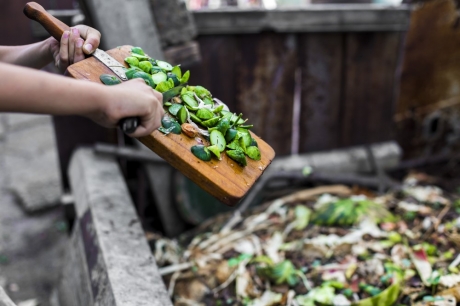
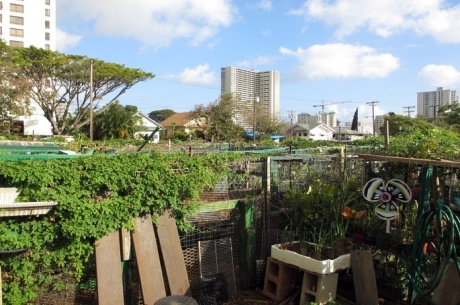
Left: Compost initiatives can help give new purpose to wasted food. ©lomiso/shutterstock.com Right: An urban garden in Honolulu. ©Eric Broder Van Dyke/shutterstock.com
- Encouraging healthy diets
Lifestyles and dietary patterns are strongly influenced by the types of food available and their affordability. In cities where there is a large choice of fast food and convenience options, available food is often energy-dense and highly processed. This is a growing trend. In lower middle-income countries, the consumption of processed food with little nutritional value increased by 5.45 percent annually between 1998 and 2012. National governments and city administrations in developing countries face the problem of having to deal with undernutrition, but also with the health effects of obesity which is increasing at an alarming rate.
However, all cities can play a greater role in ensuring healthy diets. In 2014, Singapore took the opportunity to assess their food outlets and launch the Healthier Dining Programme. A subsidy scheme encouraged food operators to use healthier ingredients, such as oils with reduced saturated fat content, and to put lower calorie meals on menus. In just over a year, the number of healthier meal options had doubled.
- Reducing and managing food waste
People in urban areas consume up to 70 percent of global food supply, but much of it is thrown away. Although the causes of food waste vary from one region in the world to another, generally poor food planning, inadequate packaging, improper storage and cultural practices are all contributing to the problem.
In addition, food waste that is not recycled or re-used is filling up the landfills. There, it decomposes and generates methane, a greenhouse gas that is more harmful to the planet than CO2. This scenario is not just a waste of food but also a waste of energy, money and natural resources such as land and water that is used to produce and process the food. Citywide measures for recovering safe and nutritious food and redistributing it through charities and food banks, composting or utilizing discarded food to generate energy can make a huge impact in reducing food waste.
In the municipality of Lima, Peru, FAO has helped to create a Food Liaison Advisory Group to tackle issues of food loss and waste. One of the group’s initiatives was a city food waste taskforce that has established a composting centre for managing biomass waste. As a result, the amount of organic waste disposed of in landfills and city drainage has been cut dramatically.

Providing access to a supply of fresh, local food in cities is key to ensuring healthy diets. ©Matej Kastelic/shutterstock.com
- Boosting green spaces forhealthier environments and improved lifestyles
As urban areas continue to expand, green spaces are disappearing. More than just for aesthetic appeal, trees and green areas are essential for improving air quality, mitigating urban temperatures, encouraging physical activity and improving overall health. Air pollution, rising local temperatures and sedentary lifestyles can increase the probability of cardiovascular and respiratory diseases, obesity and fuel the spread of new pathogens.
Food systems need to be planned and managed together with the green environment, in order to curb pollution, encourage healthy diets and physical activity. In Los Angeles, for instance, researchers have found that the more parks there are within 500 metres of a child’s home, the lower that child’s Body Mass Index (BMI) will be at age 18.
- Reconnecting cities with surrounding rural areas
Cities and urban areas do not function in isolation from rural areas. In fact, they are highly dependent on the rural regions surrounding them. Cities rely heavily on the neighboring rural areas for food, labour force, water supply and food waste disposal. In Kisumu City, Kenya, the Food Liaison Advisory Group, a stakeholder platform comprising urban-rural actors, is taking a wider approach and reconnecting the city with the larger region in planning its food system. This helps ensure a supply of healthy, safe and nutritious food, while also promoting market access for rural farmers and creating jobs within the food system.
It is often said that the battle for achieving the Sustainable Development Goals (SDGs) will be won or lost in cities, which is why SDG 11 – making cities inclusive, safe and sustainable – is so important. FAO’s Urban Food Agenda helps governments and institutions to break down the rural-urban divide and promote sustainable food-system thinking. If we can do this and continue to drive urban innovation in thoughtful, ground-breaking ways, we can ensure that “no one and no place” is left behind.

You may also like

Urban heat local food production
Vibrant Agro industry

