
Composting at Bloedel, Part 1
courtesy : bloedel reseve
Composting at Bloedel, Part 1
In keeping with Bloedel Reserve’s commitment to horticultural stewardship and environmental sustainability, we operate a significant composting program on our grounds. Leaves, grass clippings, and other types of organic debris are collected, composted, and recycled back into the gardens and around the grounds in the form of mulch. Applying suitably composted mulch improves plant nutrient levels in the soil, and improves both the drainage and water-holding capacity of the soil. It may also help suppress some soil-borne plant diseases. And by re-using our own garden waste, we reduce our reliance on outside resources and increase the sustainability of our operations.
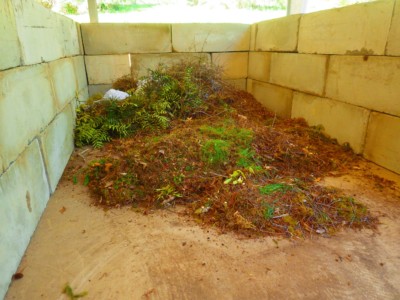
Uncomposted garden debris
Using What Nature Gives Us
Part of regular operations at Bloedel involves tidying up garden beds and lawns. Trees are messy. They drop leaves, branches, flowers, and seed pods as a part of their life cycle. Smaller items like leaves are collected and brought back to our maintenance area and stored in a large pile. Branches are also rounded up and eventually run through a chipper. The leaves and wood chips are stored separately. During the winter months, the leaf pile is “cold composted,” which is a fancy way of saying we just let the pile sit there over winter. The picture here shows uncomposted materials piled in a bin in our new compost facility. But for years, our composting has been done by simply heaping materials into large piles on the asphalt lot located directly outside the sheds that the horticulture and grounds team uses for storing equipment and for their meeting and office space.

Grass clippings piled separately from other materials
The Grass Isn’t Always Greener
Once spring arrives, the lawns begin growing and we haul out the lawn mowers. The resulting grass clippings are a problematic form of organic matter. Grass clippings can’t be stored easily for composting later on because they rot rapidly and produce a foul odor. If grass clippings are piled for more than a couple of days, they not only begin to stink, but they also mat together, which makes them very difficult to mix with other materials for composting.
We get around this smelly problem by taking the more slowly rotting leaf material we have stored over winter and mixing it with grass clippings within a day of mowing. The leaves and grass are mixed at an approximate ratio of three parts leaves to one part grass. This mixture begins the “hot composting” phase of our composting process. The rotting that takes place is fast enough to generate some heat, but not so fast that the pile is prone to bad smells.
It’s All About Temperature and Timing
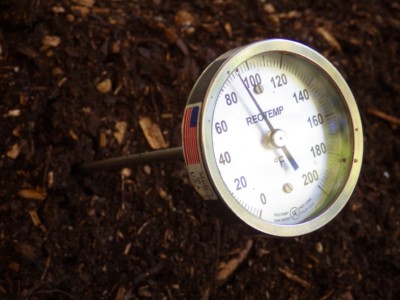
Compost thermometer
As the pile composts, the heat generation drops off after one to two weeks. As heating slows, so does the composting because the decay microbes are using up all the oxygen. To speed things back up, we have been using a tractor to turn the pile over. The turning process adds oxygen back into to the compost and speeds up heating once more.
We try to maintain a compost pile core temperature of about 130 degrees Fahrenheit. This temperature is ideal for rotting speed, and it suppresses some plant diseases and reduces the number of viable weed seeds in the final compost product. If the compost heats up to 160 degrees or more, many beneficial microbes are killed and that’s bad for producing good compost. Cooling off too far below 130 degrees and composting slows, plant disease suppression weakens, and more weed seeds can survive.

Manure for the mulch mix
The Material Matters
Some plant debris is intentionally left out of the compost at Bloedel Reserve. Plant material with known or possible serious plant diseases (like Ramorum Blight, see here and here for a two-part description) kept out of our composting operations. Any weeds on the Washington State Noxious Weed List are also kept out of the compost. Noxious weeds are either bagged and thrown into the trash or burned if they can be safely burned. Some noxious weeds can produce toxic smoke.
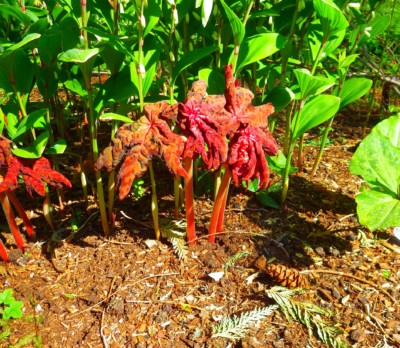 Once the compost is finished, it is mixed with wood chips. We also currently buy 150-200 cubic yards of dairy manure that we age before adding it to the compost and wood chips.
The resulting mulch is applied to garden beds at Bloedel Reserve in the fall and winter. Recycling organic waste this way helps us maintain a tidy appearance to the grounds while supporting plant and soil health. It is a natural part of good environmental stewardship for a botanical garden.
Achieving 100% Recycling
The composting goal for Bloedel is to achieve as close to 100% recycling of our organic debris as possible. We have a long way to go, but we are making progress.
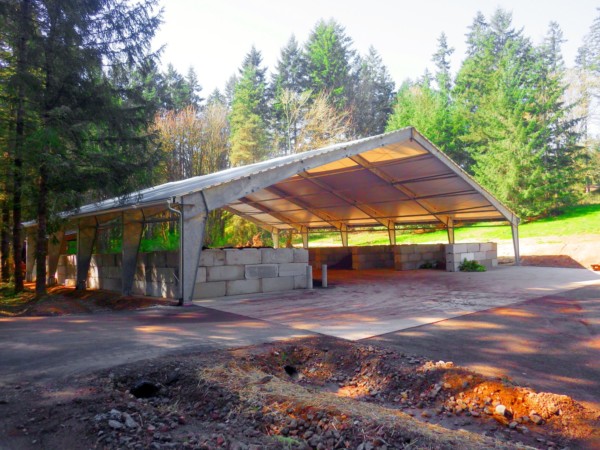
The new compost facility
One significant step towards that goal is the completion of a new composting facility at Bloedel Reserve. Construction began earlier this year and has been made possible thanks pre-pandemic funds that were donated specifically for this project. The new structure is a large, partially covered concrete slab with multiple bins for material storage and compost creation.
Thanks to an innovative design from Green Mountain Technologies, helmed by Michael Bryan-Brown who is also a Bloedel Reserve Trustee, the new facility uses a forced-air technology that allows the composting process to take place without the need for a truck to turn the piles of decomposing material. The design substantially increases the amount of compost we can create while reducing our need to acquire manure as an addition to our compost/mulch mixture. It also significantly cuts the time the entire process takes.

You may also like

Urban heat local food production
Vibrant Agro industry

