
Climate change
COURTESY : www.bbc.com
CLIMATE CHANGE
In the document, researchers wrote that greenhouse gases are projected to peak “at the latest before 2025”.
This implies that carbon could increase for another three years and the world could still avoid dangerous warming.
But scientists say that’s incorrect and that emissions need to fall immediately.
The IPCC’s most recent report focused on how to limit or curtail emissions of the gases that are the root cause of warming.
In their summary for policymakers, the scientists said it was still possible to avoid the most dangerous levels of warming by keeping the rise in global temperatures under 1.5C this century.
This will take a herculean effort, with carbon emissions needing to shrink by 43% by the end of this decade to stay under this threshold of danger.
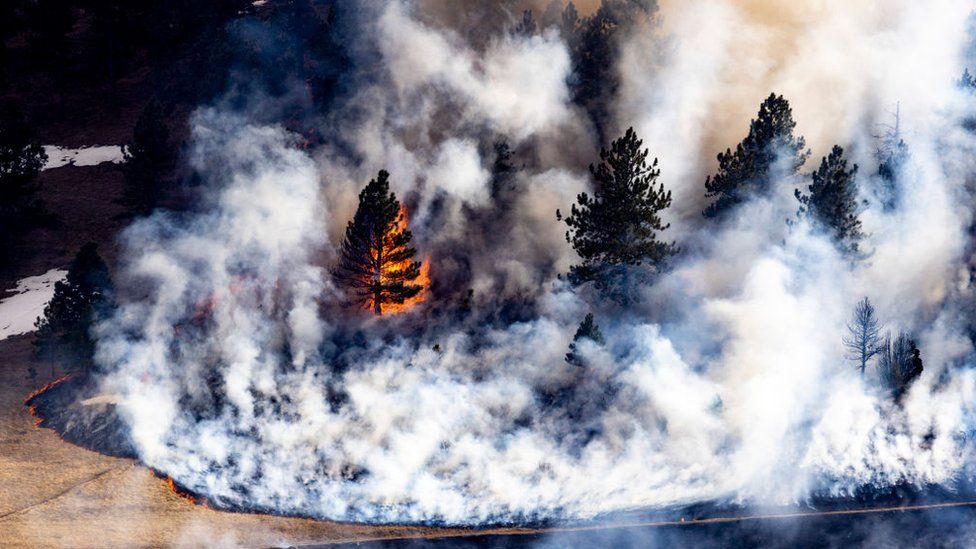 IMAGE SOURCE,GETTY IMAGES
But before they fall, emissions need to reach a peak – and it’s in the text explaining this idea that the report becomes confusing.
“Global greenhouse gases are projected to peak between 2020 and at the latest by 2025, in global modelled pathways that limit warming to 1.5C,” the summary states.
Most media outlets including the BBC concluded that meant emissions could rise until 2025 and the world could still stay under 1.5C.
“When you read the text as it’s laid out, it does give the impression that you’ve got to 2025 which I think is a very unfortunate outcome,” said Glen Peters, from the Centre for International Climate Research in Oslo, and an IPCC lead author.
“It’s an unfortunate choice of wording. That is, unfortunately, going to potentially have some rather negative consequences.”
So what went wrong?
It’s partly because the climate models that scientists use to project temperatures work in five-year blocs, so 2025 follows 2020 for example, without reference to the years in between.
“Because models work on 5-year increments, we can’t derive statements with higher precision,” said Dr Joeri Rogelj, from Imperial College London, and an IPCC lead author.
“But when you look at the scientific data supporting this headline, it becomes immediately clear that any scenario in line with 1.5C drops emissions from 2020 to 2025. Even for scenarios that limit warming to 2C this is also the case.”
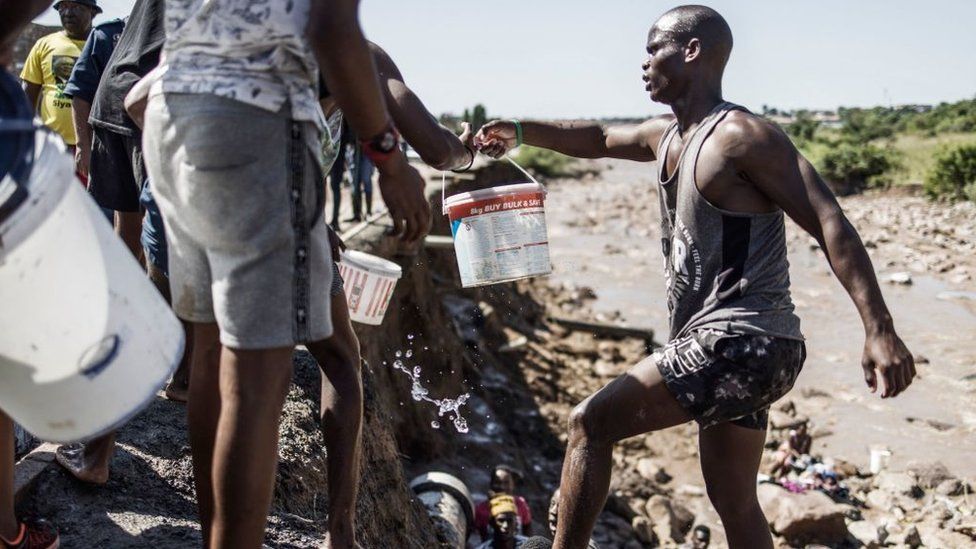 IMAGE SOURCE,GETTY IMAGES
Another issue was timing.
Covid delayed the mitigation report by about a year but the information used came from models that projected peaking, by and large, in 2020.
“The headline statement couldn’t say emissions should have peaked already, and the governments wouldn’t allow the report to say emissions should have peaked in 2020,” said Dr Edward Byers, an IPCC contributing author from the International Institute for Applied Systems Analysis.
This led to a lengthy debate during the two-week long approval session between the scientists and government officials over the exact words to use.
“There were many discussions about whether words such as “now” or “immediately” can be used,” said Dr Byers.
“Some parties or people had concerns that that this would soon be out of date. And if the report was read in the future then “immediately” doesn’t mean anything.”
 IMAGE SOURCE,GETTY IMAGES
“I don’t personally agree with that so I think ‘immediately’ would have been the best word to use.”
A major challenge in communicating complex messages about climate change is that the more simplified media reports of these events often have more influence than the science itself.
This worries observers who argue that giving countries the impression that emissions can continue to grow until 2025 would be a disaster for the world.
“We definitely don’t have the luxury of letting emissions grow for yet another three years,” said Kaisa Kosonen from Greenpeace.
“We have eight years to nearly halve global emissions. That’s an enormous task, but still doable, as the IPCC has just reminded us – but if people now start chasing emissions peak by 2025 as some kind of benchmark, we don’t have a chance.”

You may also like

Urban heat local food production
Vibrant Agro industry

