
ALOE VERA PLANTS
COURTESY:WIKIPEDIA
ALOE VERA PLANTS

Aloe vera (/ˈæloʊiː/ or /ˈæloʊ/) is a succulent plant species of the genus Aloe. Having some 500 species, Aloe is widely distributed, and is considered an invasive species in many world regions.
An evergreen perennial, it originates from the Arabian Peninsula, but grows wild in tropical, semi-tropical, and arid climates around the world. It is cultivated for commercial products, mainly as a topical treatment used over centuries.[3][4] The species is attractive for decorative purposes, and succeeds indoors as a potted plant.
It is used in many consumer products, including beverages, skin lotion, cosmetics, ointments or in the form of gel for minor burns and sunburns. There is little clinical evidence for the effectiveness or safety of Aloe vera extract as a cosmetic or topical drug. The name derives from Latin as aloe and vera
Etymology and common names

The botanical name derives from Latin, aloe (also from Greek), having uncertain origin, and vera (“true”) from Latin. Common names use aloe with a region of its distribution, such as Chinese aloe, Cape aloe or Barbados aloe.
Description

Aloe vera is a stemless or very short-stemmed plant growing to 60–100 centimetres (24–39 inches) tall, spreading by offsets. The leaves are thick and fleshy, green to grey-green, with some varieties showing white flecks on their upper and lower stem surfaces. The margin of the leaf is serrated and has small white teeth. The flowers are produced in summer on a spike up to 90 cm (35 in) tall, each flower being pendulous, with a yellow tubular corolla 2–3 cm (3⁄4–1+1⁄4 in) long. Like other Aloe species, Aloe vera forms arbuscular mycorrhiza, a symbiosis that allows the plant better access to mineral nutrients in soil.
Aloe vera leaves contain phytochemicals under study for possible bioactivity, such as acetylated mannans, polymannans, anthraquinone C-glycosides, anthrones, and other anthraquinones, such as emodin and various lectins.
Taxonomy
Historical image from Acta Eruditorum, 1688
The species has several synonyms: A. barbadensis Mill., Aloe indica Royle, Aloe perfoliata L. var. vera and A. vulgaris Lam. Some literature identifies the white-spotted form of Aloe vera as Aloe vera var. chinensis;[17][18] and the spotted form of Aloe vera may be conspecific with A. massawana. The species was first described by Carl Linnaeus in 1753 as Aloe perfoliata var. vera,[20] and was described again in 1768 by Nicolaas Laurens Burman as Aloe vera in Flora Indica on 6 April and by Philip Miller as Aloe barbadensis some ten days after Burman in the Gardener’s Dictionary.
Techniques based on DNA comparison suggest Aloe vera is relatively closely related to Aloe perryi, a species endemic to Yemen. Similar techniques, using chloroplast DNA sequence comparison and ISSR profiling have also suggested it is closely related to Aloe forbesii, Aloe inermis, Aloe scobinifolia, Aloe sinkatana, and Aloe striata.[23] With the exception of the South African species A. striata, these Aloe species are native to Socotra (Yemen), Somalia, and Sudan. The lack of obvious natural populations of the species has led some authors to suggest Aloe vera may be of hybrid origin.
Distribution
- verais considered to be native only to the south-east Arabian Peninsula in the Al-Hajar mountains in north-eastern Oman. However, it has been widely cultivated around the world, and has become naturalized in North Africa, as well as Sudan and neighboring countries, along with the Canary Islands, Cape Verde, and Madeira Islands. It has also naturalized in the Algarve region of Portugal,
- and in wild areas across southern Spain, especially in the region of Murcia.
The species was introduced to China and various parts of southern Europe in the 17th century. It is widely naturalized elsewhere, occurring in arid, temperate, and tropical regions of temperate continents. The current distribution may be the result of cultivation.[
Cultivation

As an ornamental plant
Aloe vera has been widely grown as an ornamental plant. The species is popular with modern gardeners as a topical medicinal plant and for its interesting flowers, form, and succulence. This succulence enables the species to survive in areas of low natural rainfall, making it ideal for rockeries and other low water-use gardens. The species is hardy in zones 8–11, and is intolerant of heavy frost and snow. The species is relatively resistant to most insect pests, though spider mites, mealy bugs, scale insects, and aphid species may cause a decline in plant health. This plant has gained the Royal Horticultural Society‘s Award of Garden Merit.
In pots, the species requires well-drained, sandy potting soil and bright, sunny conditions. Aloe plants can turn red from sunburn under too much direct sun, though gradual acclimation may help. The use of a good-quality commercial propagation mix or packaged “cacti and succulent mix” is recommended, as they allow good drainage. Terra cotta pots are preferable as they are porous. Potted plants should be allowed to completely dry before rewatering. When potted, aloes can become crowded with “pups” growing from the sides of the “mother plant”. Plants that have become crowded can be divided and repotted to allow room for further growth, or the pups can be left with the mother plant. During winter, Aloe vera may become dormant, during which little moisture is required. In areas that receive frost or snow, the species is best kept indoors or in heated glasshouses. Houseplants requiring similar care include haworthia and agave.
There is large-scale agricultural production of Aloe vera in Australia, Cuba, the Dominican Republic, China, Mexico, India, Jamaica, Spain, where it grows even well inland, Kenya, Tanzania, and South Africa, along with the USA to supply the cosmetics industry.
Uses

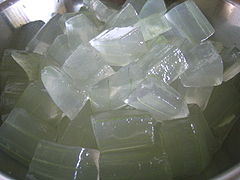
Two substances from Aloe vera – a clear gel and its yellow latex – are used to manufacture commercial products. Aloe gel typically is used to make topical medications for skin conditions, such as burns, wounds, frostbite, rashes, psoriasis, cold sores, or dry skin. Aloe latex is used individually or manufactured as a product with other ingredients to be ingested for relief of constipation. Aloe latex may be obtained in a dried form called resin or as “aloe dried juice”

You may also like

Urban heat local food production
Vibrant Agro industry


1 Comment
berfeor b0da67c006 https://marketplace.visualstudio.com/items?itemName=spitfaer.Rslogix-500-Software-Serial-Number-BEST