
Smart city-1
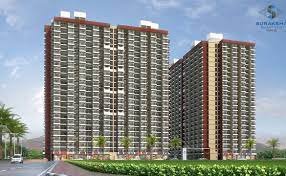
Smart city-1
courtesy : Smart city-1
Characteristics
It has been suggested that a smart city (also community, business cluster, urban agglomeration or region) uses information technologies to:
- Make more efficient use of physical infrastructure (roads, built environment and other physical assets) through artificial intelligence and data analytics in order to support a strong and healthy economic, social, cultural development.
- Engage effectively with local governance by use of open innovation processes and e-participation, improving the collective intelligence of the city’s institutions through e-governance, with emphasis placed on citizen participation and co-design.
- Learn, adapt and innovate and thereby respond more effectively and promptly to changing circumstances by improving the intelligence of the city.
They evolve towards a strong integration of all dimensions of human intelligence, collective intelligence, and also artificial intelligence within the city: The intelligence of cities “resides in the increasingly effective combination of digital telecommunication networks (the nerves), ubiquitously embedded intelligence (the brains), sensors and tags (the sensory organs), and software (the knowledge and cognitive competence)”.
These forms of intelligence in smart cities have been demonstrated in three ways:
- Orchestration intelligence: Where cities establish institutions and community-based problem solving and collaborations, such as in Bletchley Park, where the Nazi Enigma cipher was decoded by a team led by Alan Turing. This has been referred to as the first example of a smart city or an intelligent community.
- Empowerment intelligence: Cities provide open platforms, experimental facilities and smart city infrastructure in order to cluster innovation in certain districts. These are seen in the Kista Science City in Stockholm and the Cyberport Zone in Hong Kong. Similar facilities have also been established in Melbourne and Kyiv.
- Instrumentation intelligence: Where city infrastructure is made smart through real-time data collection, with analysis and predictive modelling across city districts. There is much controversy surrounding this, particularly with regards to surveillance issues in smart cities. Examples of Instrumentation intelligence are those implemented in Amsterdam. This is realized through:
- A common IP infrastructure that is open to researchers to develop applications.
- Wireless meters and devices transmit information at the point in time.
- A number of homes being provided with smart energy meters to become aware of energy consumption and reduce energy usage.
- Solar power garbage compactors, car recharging stations and energy saving lamps.
# demonstrated in three ways
# smart city
#Instrumentation intelligence
#ISBC

You may also like

Urban heat local food production
25 November, 2022
Vibrant Agro industry
24 November, 2022

Waste recycling
24 November, 2022
