
Water and soil
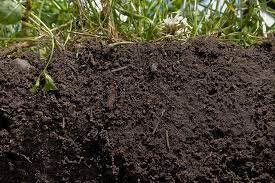
Water and soil
courtesy : Water and soil
All life forms on Earth depend on water. Water is constantly absorbed or excreted and holds various physiological and biochemical functions. Depending on water needs, plants and their parts differ. When focusing on limiting factors for growth and development of a plant, water is considered one of the biggest and most important factors due to the fact that plants need relatively large amounts of it.
Soil if formed from a solid, liquid and gas phase or in other words from soil particles, water and air. Within the solid phase there is porous space that is variously sized and shaped. Inside the pores there is water, air or some other gas. Porous space is a natural supply of water and air, while the characteristics of the pores depend on the soil type and its physical characteristics.
Pores are divided into micropores for holding water and macropores for holding air or water in a short period. Number of pores is not only of great importance for agricultural production, but also the ratio between micropores and macropores is importaint as well. The most favorable ratio is considered from 3:2 to 1:1. Total porosity in arable land ranges from 50 to 65 %.
Total porosity, the ratio, soil texture and structure and content of organic matter affect the amount of soil water. In example, sandy soils retain less amount of water than clay soils due to the active surface of the soil particles and more pores that bind and retain water. Organic matter has a great ability to bind and retain soil water. For water regulation in agricultural production it is crucial to have timely information on soil moisture. To understand the corelation between plants, soil and water, it is necessary to know the basics on the types of soil water, water-soil energy relationship, soil water constants and soil water movement.
Types of soil water
Soil water is divided into several basic types, which are chemical, hygroscopic, membraneous, cappilary and gravitational water.
Chemical water is divided into water of crystallization (CaSO4 x 2H2O) and water of constitution (OH-). This type is of water is inaccessible to plants and it is held by force equivalent to a pressure greater than 5000 bar (500 MPa).
Hygroscopic water is moisture in a form of molecular membrane that is adsorbed on the surface of soil particles. It is immobile and inaccessible to plants and is held by force equivalent to a pressure of 30 bar (3 MPa) to 1000 bar (100 MPa).
Membraneous water is in liquid form that envelopes soil particles in a form of a membrane. By increasing soil moisture, a thicker membrane is developed around the soil particle, thereby reducing the water retention force. It is inaccessible to plants and is held by force equivalent to a pressure of 15 bar (1.5 MPa) to 30 bar (3 MPa).
Capillary water is in liquid form, located in the micropores and is held by the forces of surface tension of the solid particles. It moves in all directions from more to less humid parts of the soil. It is held by force equivalent to a pressure of 15 bar (1.5 MPa) to 0.33 bar (0.033 MPa). It is divided into immobile, less mobile and easy mobile water. Immobile capillary water is inaccessible to plants and is held by force equivalent to a pressure of 15 bar (1,5 MPa). Less mobile water is hard-access for plants and is held by force equivalent to the pressure of 15 bar (1.5 MPa) to 6.25 bar (0.625 MPa). Easy mobile water represents the most useful water for plants and is held by force equivalent to a pressure of 6.25 bar (0.625 MPa) to 0.33 bar (0.033 MPa).
Gravitational water occurs in the moment when all pores of the soil are filled with water. In such a state of saturation, water is drained by gravity through the macropores and is not soil-binded.
#Water and soil
#physiological and biochemical functions
#ISBC

You may also like

Urban heat local food production
Vibrant Agro industry

