
Wild life
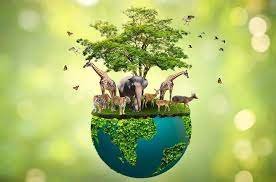
Wild life
courtesy : Wild life
INTRODUCTION
Human interactions with wildlife are a defining experience of human existence. These interactions can be positive or negative. Homo sapiens have competed with other species for habitat and resources and have innovated and adapted to become the dominant ecological force on the planet . This conflict has contributed to the extinction of numerous species ; changes in ecosystem structure and function ; and immeasurable loss of human life, crops, livestock, and property . The amelioration and mitigation of this conflict is central to the conservation and restoration of many species, and debates over how and whether to coexist with other animals drive social, economic, and political conflict within and among human communities. The challenges of human–wildlife conflict are older than recorded history but an interdisciplinary field of study focused on human–wildlife conflict and coexistence, although still relatively new, is growing rapidly. Over the past 20 years, the number of scientific publications addressing human–wildlife conflict and coexistence has increased almost exponentially.In this review, I synthesize the current state of scholarship on human–wildlife conflict and coexistence. I define key concepts, describe the importance of conflict, place it in evolutionary and historical context, examine broad categories of conflict, characterize factors influencing conflict and responses to conflict, and identify future research needs. This topic is too large to cover all aspects of conflict in depth, so I focus particular attention on large vertebrates and human–wildlife conflict in the context of wildlife conservation.
Defining Human–Wildlife Conflict and Coexistence
Human–wildlife conflict is commonly described as conflict that occurs between people and wildlife ; actions by humans or wildlife that have an adverse effect on the other ; threats posed by wildlife to human life, economic security, or recreation ; or the perception that wildlife threatens human safety, health, food, and property . The term wildlife is defined broadly as nondomesticated plants and animals , although domesticated and feral animals are sometimes included in the human–wildlife conflict literature. Wildlife damage management is defined as the science and art of diminishing the negative consequences of wildlife while maintaining or enhancing their positive aspects , and is often synonymous with human–wildlife conflict mitigation. Numerous scholars point out that the notion of human–wildlife conflict is complicated by underlying tensions from human–human conflicts over conservation and resource use . Another complication is that human interactions with wildlife are often framed negatively even if important positive benefits—recreational, educational, psychological, and ecosystem services—exist. As a result, there is a growing convergence around the phrase human–wildlife conflict and coexistence to connote the recognition of both problems and solutions, although some authors question whether coexistence is more precisely co-occurrence.
#Defining Human–Wildlife Conflict and Coexistence
# Wild life
#co-occurrence
#ISBC

You may also like

Urban heat local food production
Vibrant Agro industry

