
Composting
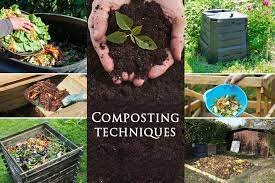
Composting
courtesy : Composting
What Is Composting?
Composting is the natural process of recycling organic matter, such as leaves and food scraps, into a valuable fertilizer that can enrich soil and plants. Anything that grows decomposes eventually; composting simply speeds up the process by providing an ideal environment for bacteria, fungi, and other decomposing organisms (such as worms, sowbugs, and nematodes) to do their work. The resulting decomposed matter, which often ends up looking like fertile garden soil, is called compost. Fondly referred to by farmers as “black gold,” compost is rich in nutrients and can be used for gardening, horticulture, and agriculture.
Organic discards can be processed in industrial-scale composting facilities, in smaller-scale community composting systems, and in anaerobic digesters, among other options. This guide focuses primarily on home composting, which is a great way to keep your organic discards out of the waste stream and produce a valuable soil amendment for your own use.
Benefits of Composting
Reduces the Waste Stream
Composting is a great way to recycle the organic waste we generate at home. Food scraps and garden waste combined make up more than 28 percent of what we throw away. Not only is food waste a significant burden on the environment, but processing it is costly. The average cost to landfill municipal solid waste in the United States was around $55 per ton in 2019. With the United States generating more than 267 million tons of municipal waste in 2017 and sending two-thirds of that to landfills and incinerators, we spent billions of dollars on waste management. Composting at home allows us to divert some of that waste from landfills and turn it into something practical for our yards.
Cuts Methane Emissions From Landfills
Typically when organic matter decomposes, it undergoes aerobic decomposition, meaning that it’s broken down by microorganisms that require oxygen. When compostable waste goes to a landfill, it gets buried under massive amounts of other trash, cutting off a regular supply of oxygen for the decomposers. The waste then ends up undergoing anaerobic decomposition, being broken down by organisms that can live without free-flowing oxygen. During anaerobic decomposition, biogas is created as a by-product. This biogas is roughly 50 percent methane and 50 percent carbon dioxide, both of which are potent greenhouse gases, with methane being 28 to 36 times more effective than CO2 at trapping heat in the atmosphere over a century. Although most modern landfills have methane capture systems, these do not capture all of the gas; landfills are the third-largest source of human-generated methane emissions in the United States.
Because our solid waste infrastructure was designed around landfilling, only about 6percent of food waste gets composted. However, states, cities, and individual businesses and vendors can spearhead zero-waste strategies to increase composting and recycling rates within their jurisdictions and to keep waste from being generated in the first place. There have been many composting success stories around the country, one notable example being San Francisco. In 1996 San Francisco established a large-scale composting program, and by 2000 it was able to divert 50 percent of its waste from landfills. By increasing its goals over the years, San Francisco has been diverting more than 80 percent of waste from landfills since 2012. That means more than 90,000 metric tons of carbon emissions are avoided each year—equivalent to the annual greenhouse gas emissions from 20,000 passenger vehicles.
#Cuts Methane Emissions From Landfills
#Reduces the Waste Stream
#Composting
#the natural process of recycling organic
#isbc

You may also like

Urban heat local food production
Vibrant Agro industry

