
Green cement
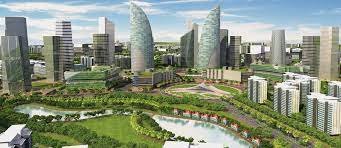
Green cement
courtesy : Green cement
Why are alternatives to cement important
Concrete production today is a bigger environmental issue than plastic. According to The Guardian, taking in all stages of production, concrete is responsible for 4% to 8% of the world’s CO2. Producing cement is a heat-intensive process that releases a large amount of carbon dioxide. Transportation and extraction of the raw materials used in cement also contribute to the emission of CO2 at a high rate.
Dangerous for human health
Concrete can be very dangerous for public health. It can cause illnesses, some of which are disabling for workers, such as:
- Skin irritation from fresh concrete leading to burns, dry skin or cracks
- Ocular irritation
- Respiratory pathologies due to inhalation of dry concrete and dust
Dangerous for the environment
Moreover, this material is also dangerous to the environment. Concrete causes damage to the most fertile layer of the earth, the topsoil. It also creates hard surfaces, therefore, contributing to surface runoff. This can lead to water pollution, flooding and soil erosion. Water is one of the four basic components of concrete, along with sand, aggregates and cement. Concrete absorbs around one-tenth of the water used in the world’s industry. The large amount of water required to make concrete can accelerate drought in areas with very little humidity. Sand is a common ingredient of concrete too. However, sand resources are becoming increasingly scarce. Because of the growing number of real estate and construction projects, it is now difficult to extract sand from the ground in many countries. The solution has been to get it from the ocean, as close to the coast as possible, but this is resulting in beach degradation. You may think the answer lies in the Sahara. Unfortunately, it is not possible to use desert sand because, as they are polished by the wind, grains have a rounded and regular shape which prevents sufficient aggregation. With a lack of suitable sand, finding alternatives to traditional concrete is not only a positive move for the planet but a necessity for the future of the construction industry.
Recycling-based construction materials
More than ever, it is necessary to think differently about the life cycle of materials to avoid pollution and waste. The circular economy thus represents a response to the environmental challenge that has intensified over the last twenty years.
Circular economy
As the United Nations defines it, the circular economy is “a system of production, exchange and sharing that enables social progress, preservation of natural capital and economic development”. Resources are not infinite, and it is becoming urgent to preserve them. The transition towards a circular economy aims to go beyond the linear economic model of extracting, manufacturing, consuming and throwing away. It calls for responsible consumption of natural resources and primary raw materials. It should prevent waste by reusing, recycling, or recovering of waste.
#lead to water pollution
#dangerous to the environment
#alternatives to cement important
#ISBC

You may also like

Urban heat local food production
Vibrant Agro industry

