
Green data center
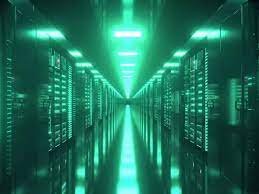
Green data center
courtesy : Green data center
Introduction
Data centers are essential to the functioning of modern economy and are found nearly in every
sector of the economy: financial services, high-tech universities, media, telecommunication,
government institutions, and retail (U.S. Environmental Protection Agency (EPA), 2007). The
overall data center workloads are expected to double from 2013 to 2018 (Upsite Technologies,
2014) and the approximately five exabytes (EB) of data online in 2002 rose to 750 EB in 2009;
by 2021 it is expected to cross the 35 zettabytes (ZB) level (Cognizant, 2012). The growth of
data centers is also driven by the evolution of cloud-based services and smart cities. By 2018,
more than 78% of workloads will be processed by cloud data centers and almost 22% will be
processed by traditional data centers (Upsite Technologies, 2014). Some of the world’s biggest
technology organizations (e.g., Microsoft, Google, IBM, Cisco) have taken on the development of
smart cities (Franks, 2014) and experts have stated that data centers located in the same region
of the smart city will be the backbone (Consorci de Serveis Universitaris de Catalunya
(CSUC)). For example, data centers will be storing and processing the data received through
sensors to detect excessive air pollution, integrated traffic controls, and education systems.
Overall, the number of data centers is expected to increase dramatically in the near future.
Considering the growth expected in data center industry, interest is growing to reduce the
energy consumption and make data centers more energy efficient. The interest is also necessary
as data centers operate 24/7 and are highly energy intensive. The energy intensity of a data
center may be 10 to 100 times of a typical commercial building (USAID ECO-III Project, 2009).
Rising energy prices are also increasing the operating cost of data centers and it has been
reported that global data center carbon emissions will grow 7% year-on-year through 2020
(National Resources Defence Council, 2014). These factors and increasing business
competitiveness is driving the data center industry to become energy efficient.
It is estimated that achieving just half of the technologically feasible savings through adopting
best practices could cut electric use by 40% in data centers (Whitney & Delforge, 2014). These
practices cover everything from facility lighting to cooling system design, and have proven
useful in helping some companies curb the trend of rising data center energy consumption
(Emerson Network Power). However, most organizations still lack a cohesive, holistic approach
for reducing data center energy use. It is not considered sufficient to simply recognize the need
to save energy and improve efficiency; one must quantify key benefits associated with energyefficient practices and prioritize actions to achieve them. To assist organizations measure the
savings from adopting best practices, associations such as The Green Grid have developed
metrics such as Power Usage Effectiveness (PUE) and Data Center Infrastructure Efficiency
(DCiE).
Best practices include energy-efficient technologies such as:
(i) The use of variable frequency
drives (VFDs), the installation of air- or water-side economizers, and improved air flow
management in the cooling system;
(ii) The use of energy-efficient uninterruptible power
supplies (UPSs), premium efficiency distribution transformers, and direct current power
systems in the electrical system; and
(iii) Server virtualization and consolidation, and energyefficient storage technologies in the IT systems. See Appendix B for a detailed list of potential
technologies, inlcuding existing barriers.
Improvements in the energy efficiency of a data center provide data center managers with a
greater understanding of, and control over, energy consumption. Enhanced control enables
more effective execution of equipment refresh rates, updates, and maintenance. It also provides
superior visibility over the performance and efficiency of the entire network, facilitating the
ability to pinpoint areas of opportunity. Energy efficiency leads to increased reliability and
availability of data centers, enhanced efficiency in design and operations, reduced operating
costs, reduced greenhouse gas emissions, and enhanced grid support for the entire electric
utility system (U.S. Environmental Protection Agency (EPA), 2013)
#Green data center
#introduction
#isbc

You may also like

Urban heat local food production
Vibrant Agro industry

