
INDIA NEW RENEWAL ENERGY POLICY
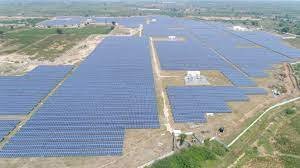
INDIA NEW RENEWAL ENERGY POLICY
courtesy : INDIA NEW RENEWAL ENERGY POLICY
INTRODUCTION
India’s energy demand is expected to increase more than that of any other country in the coming decades due to its sheer size and enormous potential for growth and development. Therefore, it is imperative that most of this new energy demand is met by low-carbon, renewable sources. India’s announcement India that it intends to achieve net zero carbon emissions by 2070 and to meet 50% of its electricity needs from renewable sources by 2030 marks a historic point in the global effort to combat climate change.
The Indian renewable energy sector is the fourth most attractive renewable energy market in the world. India was ranked fourth in wind power, fifth in solar power and fourth in renewable power installed capacity, as of 2020. Installed renewable power generation capacity has gained pace over the past few years, posting a CAGR of 15.92% between FY16-22. India is the market with the fastest growth in renewable electricity, and by 2026, new capacity additions are expected to double.
With the increased support of the Government and improved economics, the sector has become attractive from an investors perspective. As India looks to meet its energy demand on its own, which is expected to reach 15,820 TWh by 2040, renewable energy is set to play an important role.
Solar power
India is densely populated and has high solar insolation, an ideal combination for using solar power in India. Announced in November 2009, the Government of India proposed to launch its Jawaharlal Nehru National Solar Mission under the National Action Plan on Climate Change. The program was inaugurated by former Prime Minister Manmohan Singh on 11 January 2010 with a target of 20GW grid capacity by 2022 as well as 2GW off-grid installations, this target was later increased to 100 GW by the same date under the Narendra Modi government in the 2015 Union budget of India. Achieving this National Solar Mission target would establish India in its ambition to be a global leader in solar power generation. The Mission aims to achieve grid parity (electricity delivered at the same cost and quality as that delivered on the grid) by 2022. The National Solar Mission is also promoted and known by its more colloquial name of “Solar India”. The earlier objectives of the mission were to install 1,000 MW of power by 2013 and cover 20×106 m2 (220×106 sq ft) with collectors by the end of the final phase of the mission in 2022.
On 30 November 2015, the Prime Minister of India Narendra Modi and the President of France Francois Hollande launched the International Solar Alliance. The ISA is an alliance of 121 solar rich countries lying partially or fully between the Tropic of Cancer and the Tropic of Capricorn, several countries outside of this area are also involved with the organization. The ISA aims to promote and develop solar power amongst its members and has the objective of mobilising $1 trillion of investment by 2030. As of August, 2019, the Indian Oil Corporation stated that it wants to invest ₹25,000 crore in renewable energy projects.
Much of the country does not have an electrical grid, so one of the first applications of solar power was for water pumping, to begin replacing India’s forty to fifty lakh diesel powered water pumps, each consuming about 3.5 kilowatts, and off-grid lighting. Some large projects have been proposed, and a 35,000 km2 (14,000 sq mi) area of the Thar Desert has been set aside for solar power projects, sufficient to generate 700 to 2,100 gigawatts. Solar power in India has been growing at a rate of 113% yoy and now dropped to around ₹4.34 (5.4¢ US) per kWh, which is around 18% lower than the average price for electricity generated by coal-fired plants.
As part of India’s ambitious solar programme the central government has set up a US$350 million fund and the Yes Bank will loan US$5 billion to finance solar projects (c. January 2018). The bidding process for the addition of 115 GW to January 2018 renewable energy levels was completed by the end of 2019–2020.
India is also the home to the world’s first and only 100% solar-powered airport, located at Cochin, Kerala. India also has a wholly 100% solar-powered railway station in Guwhati, Assam. India’s first and the largest floating solar power plant was constructed at Banasura Sagar reservoir in Wayanad, Kerala.
The Indian Solar Loan Programme, supported by the United Nations Environment Programme has won the prestigious Energy Globe World award for Sustainability for helping to establish a consumer financing program for solar home power systems. Over three years more than 16,000 solar home systems have been financed through 2,000 bank branches, particularly in rural areas of South India where the electricity grid does not yet extend.
Launched in 2003, the Indian Solar Loan Programme was a four-year partnership between UNEP, the UNEP Risoe Centre, and two of India’s largest banks, the Canara Bank and Syndicate Bank.

You may also like

Urban heat local food production
Vibrant Agro industry

