
MARS NEWS
MARS NEWS
courtesy : Mars news
Mars
2.7% Nitrogen 1.6% Argon 0.2% Oxygen 0.07% Carbon monoxide 0.03% Water vapor 0.01% Nitric oxide 2.5 ppm Neon 300 ppb Krypton 130 ppb Formaldehyde 80 ppb Xenon 30 ppb Ozone.
Mars is the fourth planet from the Sun in the Solar System. The planet is named after Mars, the Roman god of war. It is also referred to as the “Red Planet” because of its reddish appearance, due to iron oxide prevalent on its surface.
Mars is a terrestrial planet with a thin atmosphere, having surface features reminiscent both of the impact craters of the Moon and the volcanoes, valleys, deserts and polar ice caps of Earth. It is the site of Olympus Mons, the highest known mountain in the Solar System, and of Valles Marineris, the largest canyon. Furthermore, in June 2008 three articles published in Nature presented evidence of an enormous impact crater in Mars’ northern hemisphere, 10,600 km long by 8,500 km wide, or roughly four times larger than the largest impact crater yet discovered, the South Pole-Aitken basin. In addition to its geographical features, Mars’ rotational period and seasonal cycles are likewise similar to those of Earth.
Until the first flyby of Mars by Mariner 4 in 1965, many speculated that there might be liquid water on the planet’s surface. This was based on observations of periodic variations in light and dark patches, particularly in the polar latitudes, which looked like seas and continents, while long, dark striations were interpreted by some observers as irrigation channels for liquid water. These straight line features were later proven not to exist and were instead explained as optical illusions. Still, of all the planets in the Solar System other than Earth, Mars is the most likely to harbor liquid water, and perhaps life. Radar data from Mars Express and the Mars Reconnaissance Orbiter have revealed the presence of large quantities of water ice both at the poles (July 2005) and at mid-latitudes (November 2008). The Phoenix Mars Lander directly sampled water ice in shallow martian soil on July 31, 2008.
Mars is currently host to three functional orbiting spacecraft: Mars Odyssey, Mars Express, and the Mars Reconnaissance Orbiter. With the exception of Earth, this is more than any planet in the Solar System. The surface is also home to the two Mars Exploration Rovers (Spirit and Opportunity) and several inert landers and rovers, both successful and unsuccessful. The Phoenix lander recently completed its mission on the surface. Geological evidence gathered by these and preceding missions suggests that Mars previously had large-scale water coverage, while observations also indicate that small geyser-like water flows have occurred during the past decade. Observations by NASA’s Mars Global Surveyor show evidence that parts of the southern polar ice cap have been receding.
Mars has two moons, Phobos and Deimos, which are small and irregularly shaped. These may be captured asteroids, similar to 5261 Eureka, a Martian Trojan asteroid. Mars can be seen from Earth with the naked eye. Its apparent magnitude reaches −2.9, a brightness surpassed only by Venus, the Moon, and the Sun, although most of the time Jupiter will appear brighter to the naked eye than Mars. Mars has an average opposition distance of 78 million km but can come as close as 55.7 million km during a close approach, such as occured in 2003.
#mars
#SOLAR SYSTERM
NASA’s Perseverance Rover Investigates Geologically Rich Mars Terrain
The most recent discoveries provide greater detail on a region of the Red Planet that has a watery past and is yielding promising samples for the NASA-ESA Mars Sample Return campaign.
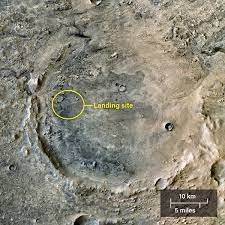
NASA’s Perseverance rover, which is well into its second science campaign, is collecting rock-core samples from features within an area that scientists have long considered to be a top prospect for finding signs of ancient microbial life on Mars. Since July 7 the rover has collected four samples from an ancient river delta in the Red Planet’s Jezero Crater, bringing the total count of scientifically compelling rock samples to 12.
“We picked the Jezero Crater for Perseverance to explore because we thought it had the best chance of providing scientifically excellent samples – and now we know we sent the rover to the right location,” said Thomas Zurbuchen, NASA’s associate administrator for science in Washington. “These first two science campaigns have yielded an amazing diversity of samples to bring back to Earth by the Mars Sample Return campaign.”
Jezero Crater, which is 28 miles (45 kilometers) wide, hosts a delta – an ancient fan-shaped feature that formed about 3.5 billion years ago at the convergence of a Martian river and a lake. Perseverance is currently examining the delta’s sedimentary rocks, which formed when particles of various sizes settled in the once-watery environment. During its first science campaign, the rover surveyed the crater’s floor, finding igneous rock, which forms deep underground from magma or during volcanic activity at the surface.
# science campaign
#ISBC

You may also like

Urban heat local food production
Vibrant Agro industry

