
e-vehicle
courtesy : marcs mclennan
e-vehicle
When it comes to transport’s carbon footprint, increasing attention is being paid to the carbon impact not only of the fuel type but of the parts used in the assembly of a vehicle, whether electric or petrol-powered.
A new report on the materials used in the vehicle manufacture by the Brussels-based Transport & Environment think tank (T&E) shows that EVs should have far fewer carbon emissions in their manufacturing process, though much depends on how the battery is made.
Lucien Mathieu is road vehicles and mobility analysis manager at T&E. BRINK spoke to him about how the process of manufacturing a vehicle determines that vehicle’s carbon footprint.
MATHIEU: The process of manufacturing a vehicle, excluding the battery, generates around six tons of carbon emissions, on average. Of course, it depends on the size of the vehicle, but that includes acquiring the primary materials and all the manufacturing processes.
The main difference in the carbon footprint of the materials used in an electric car versus a petrol car comes down to the battery. An electric engine is much smaller and much lighter than a petrol or a diesel engine, which is much more complex and, therefore, requires significantly more materials and manufacturing.
Sourcing the Energy
Even more important in terms of reducing the carbon impact of the production of a vehicle — whether electric or not — is the source of the energy used by the car producer on its site. It matters whether the car producers use renewable electricity and whether their manufacturing processes are energy efficient. This is essential when seeking to reduce manufacturing emissions and is especially true in the production of the EV battery.
We have a tool online that allows you to look at the entire lifecycle of a vehicle and compare the carbon emissions of any car, petrol or electric, to see where the battery is made, what type of electricity is used to recharge the electric car, etc.
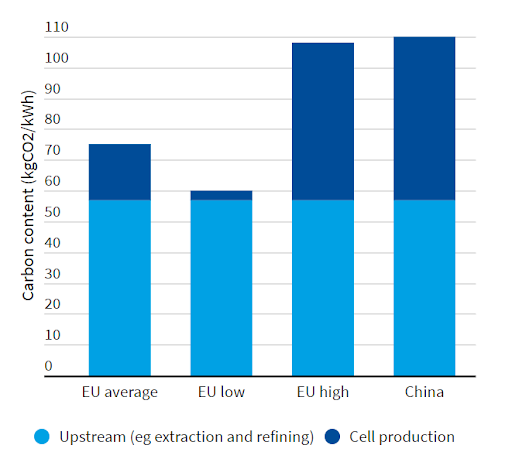
For an EV, the second most critical element after the source of electricity is how the battery is actually made. Manufacturing an average battery will add between four to five tons of carbon dioxide emissions. We divide these impacts into two phases. The first phase, the upstream parts, is the extraction of the raw material for the battery and the refining of those materials.

You may also like

Urban heat local food production
Vibrant Agro industry

